RTK-GNSS robot mowers
RTK-GNSS mowers use satellite positioning corrected by a reference antenna or network service to reach centimetre accuracy, so no boundary wire is needed.
- Models
- 8
- Brands
- 4
- Lawn area
- up to 24,000 m²
- Max slope
- 40–60%
- Price
- ≈€906 – €11,868
- Accuracy
- Centimetre-level with good sky view
Brands: GARDENA, STIGA, Kress, Ambrogio · filter in catalog →
About the RTK-GNSS
RTK-GNSS mowers rely on satellite positioning with correction data to reach centimetre accuracy, allowing wire-free virtual boundaries.
RTK stands for Real-Time Kinematic. A stationary reference receiver — on your roof, a wall or a pole — sees the same satellites as the mower. Because the station knows it is not moving, it can calculate the error in the satellite signals and send a correction to the mower several times per second. The result is a position accurate to 1–3 cm.
With RTK you draw the lawn boundary, zones, no-go areas and passages in the app instead of burying a wire, and you can change them in seconds. The mower drives in systematic parallel lines and remembers where it has already cut.
The weak spot is the sky: tall trees, house walls, carports and steep valleys block or reflect the signal. Put the station where it sees as much open sky as possible, and check in the app's signal map which parts of the lawn have a stable fix before you buy accessories or extend zones.
Network RTK (sold as NetRTK, RTKⁿ or RTK Cloud) replaces the home station with corrections delivered over the internet from professional base stations — no antenna on your house, but you need mobile or Wi-Fi coverage across the lawn.
RTK-GNSS: how it works
- Setup
- Reference antenna or network RTK; boundaries mapped in the app.
- Accuracy
- Centimetre-level with good sky view
- Best for
- Open lawns without large trees
- App & software
- App mapping and scheduling
Strengths and drawbacks
Strengths
- + No boundary wire
- + Systematic mowing
Drawbacks
- – Loses accuracy under trees and next to tall buildings
All RTK-GNSS mowers, by price
| Mower | Navigation | Max area | Max slope | Noise | Price |
|---|---|---|---|---|---|
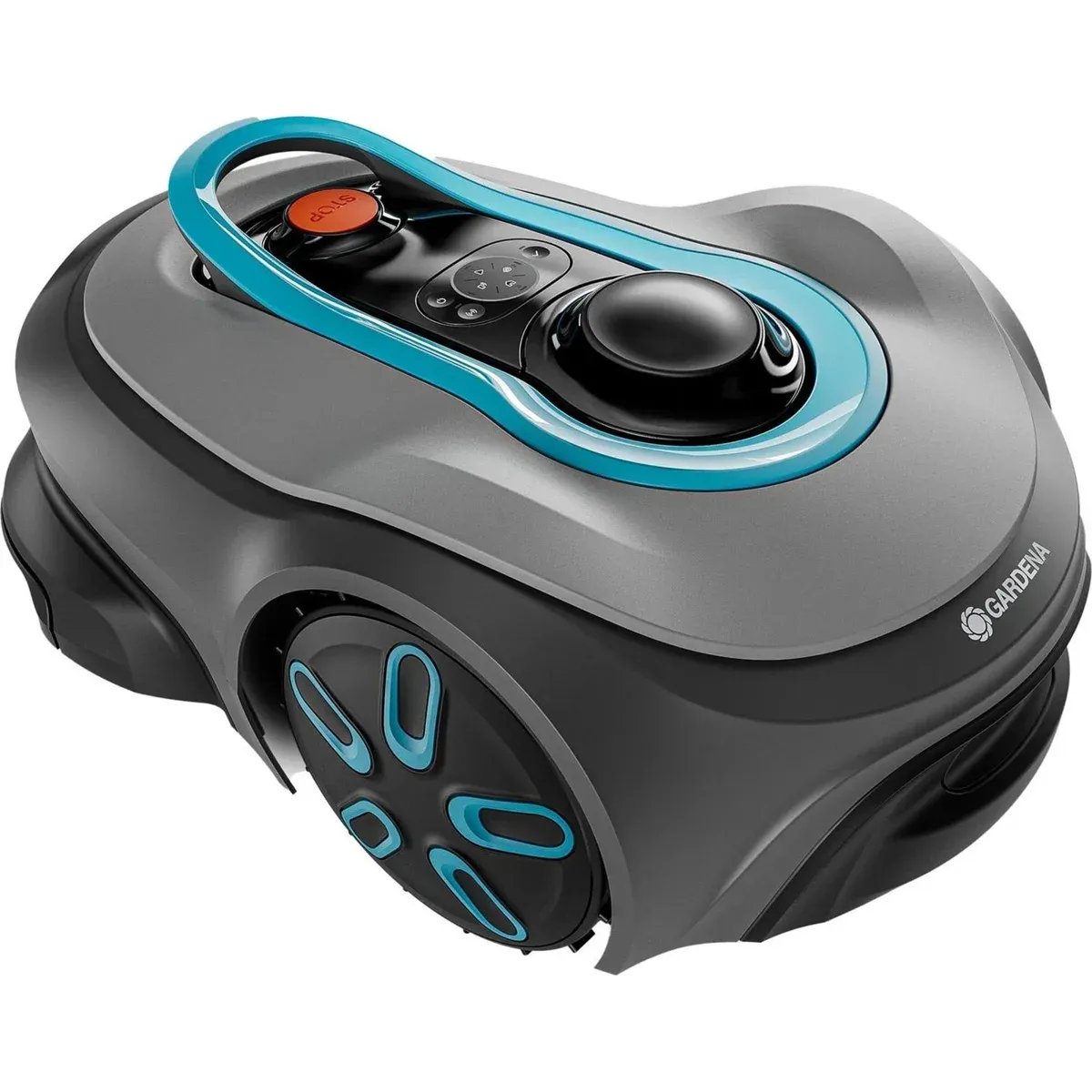 GARDENAsmart SILENO free 600 GARDENAsmart SILENO free 600 | GNSS + LONA Intelligence | 600 m² | — | — | €906.38 |
| GARDENAsmart SILENO free 1000 | GNSS + LONA Intelligence | 1,000 m² | — | — | €1,304.89 |
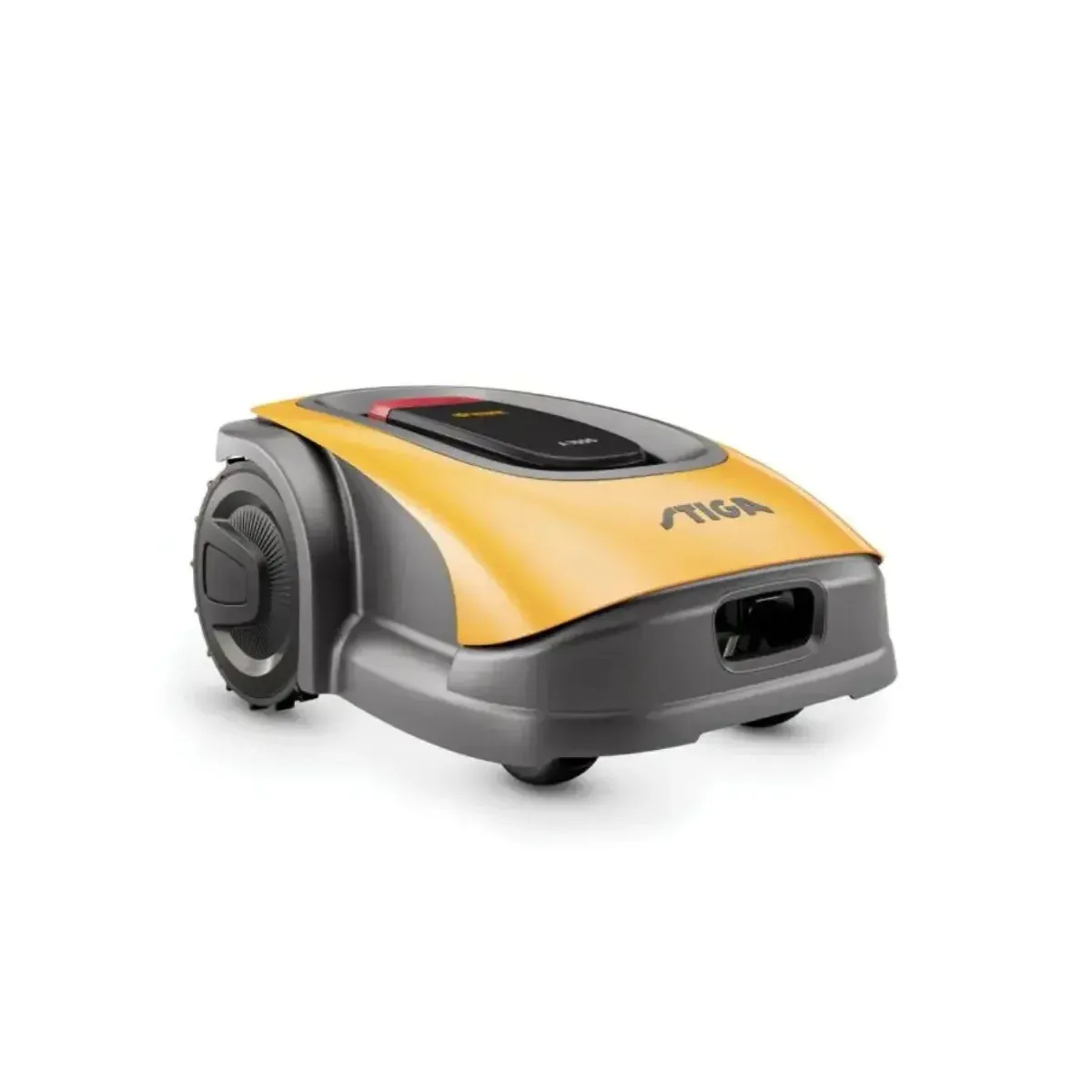 STIGAA 1500 STIGAA 1500 | GPS-RTK + AGS, 4G cloud | 2,500 m² | 45% | 59 dB(A) | £2,769≈€3,240 |
| STIGAA 3000 | GPS-RTK + AGS, 4G cloud | 4,500 m² | 50% | 59 dB(A) | £3,699≈€4,328 |
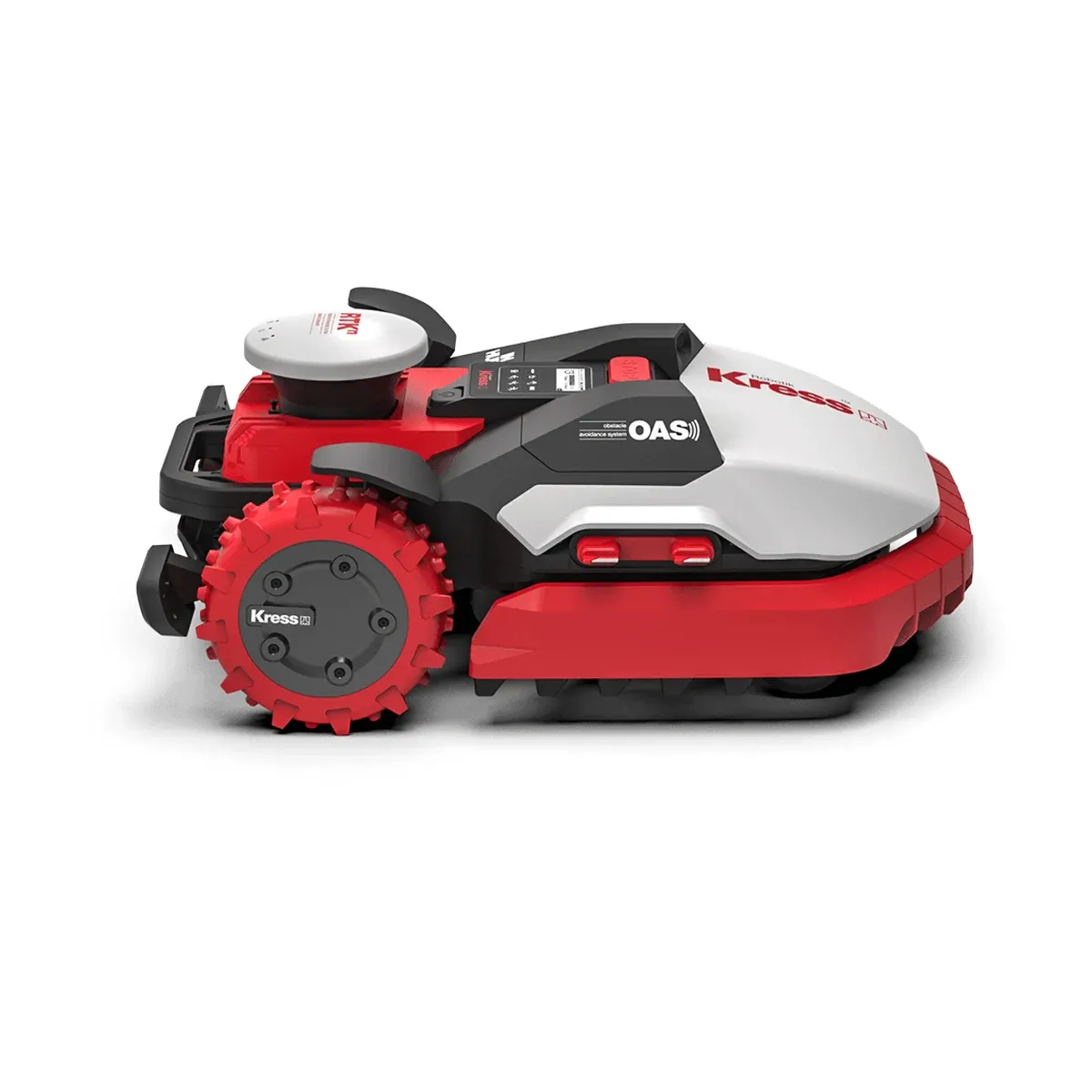 KressKR236 Mission RTKn 6-acre KressKR236 Mission RTKn 6-acre | RTKn + OAS obstacle avoidance | 24,000 m² | 40% | — | $13,799.99≈€11,868 |
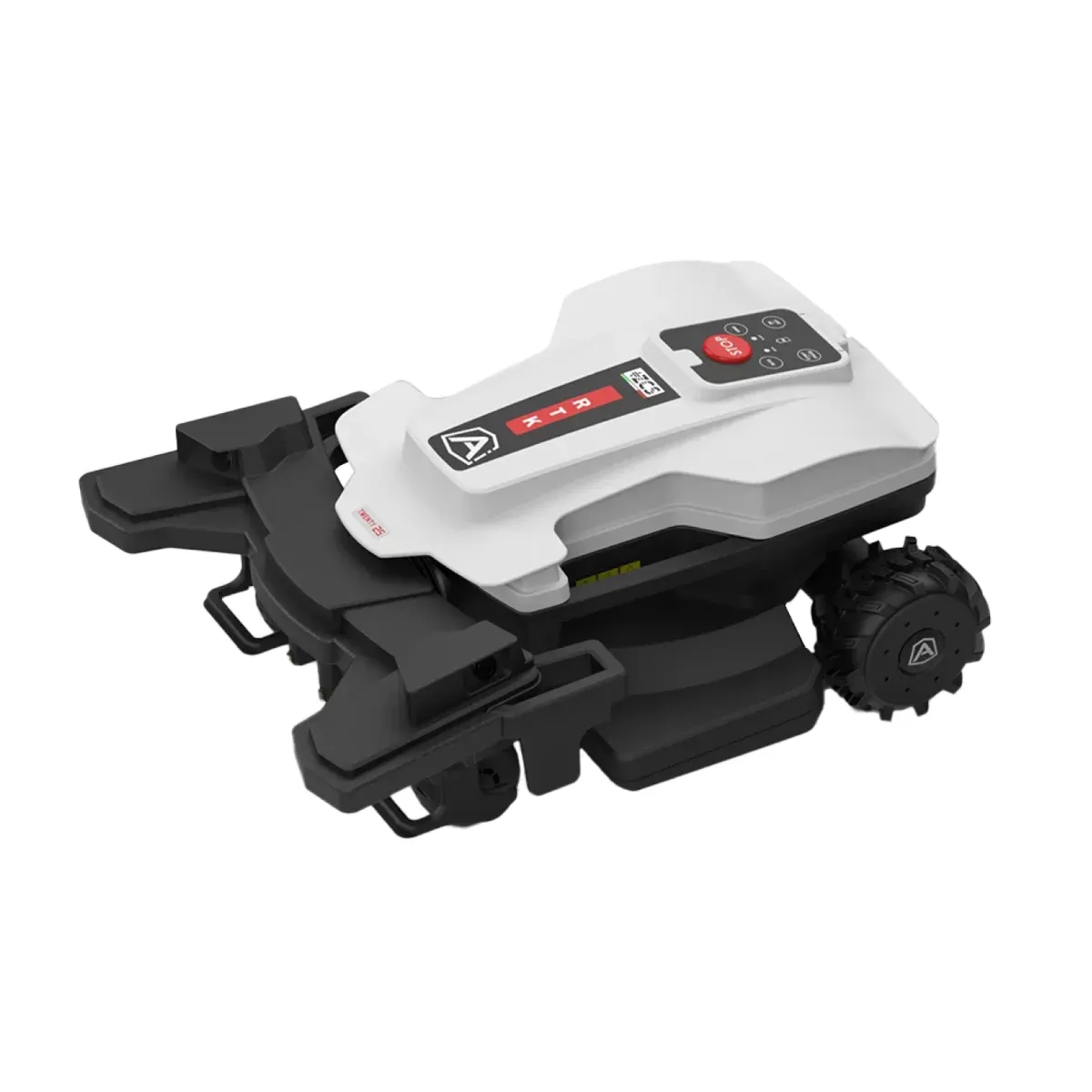 AmbrogioTwenty 25 RTK AmbrogioTwenty 25 RTK | GPS-RTK, pre-set path | 3,000 m² | 45% | 60 dB(A) | — |
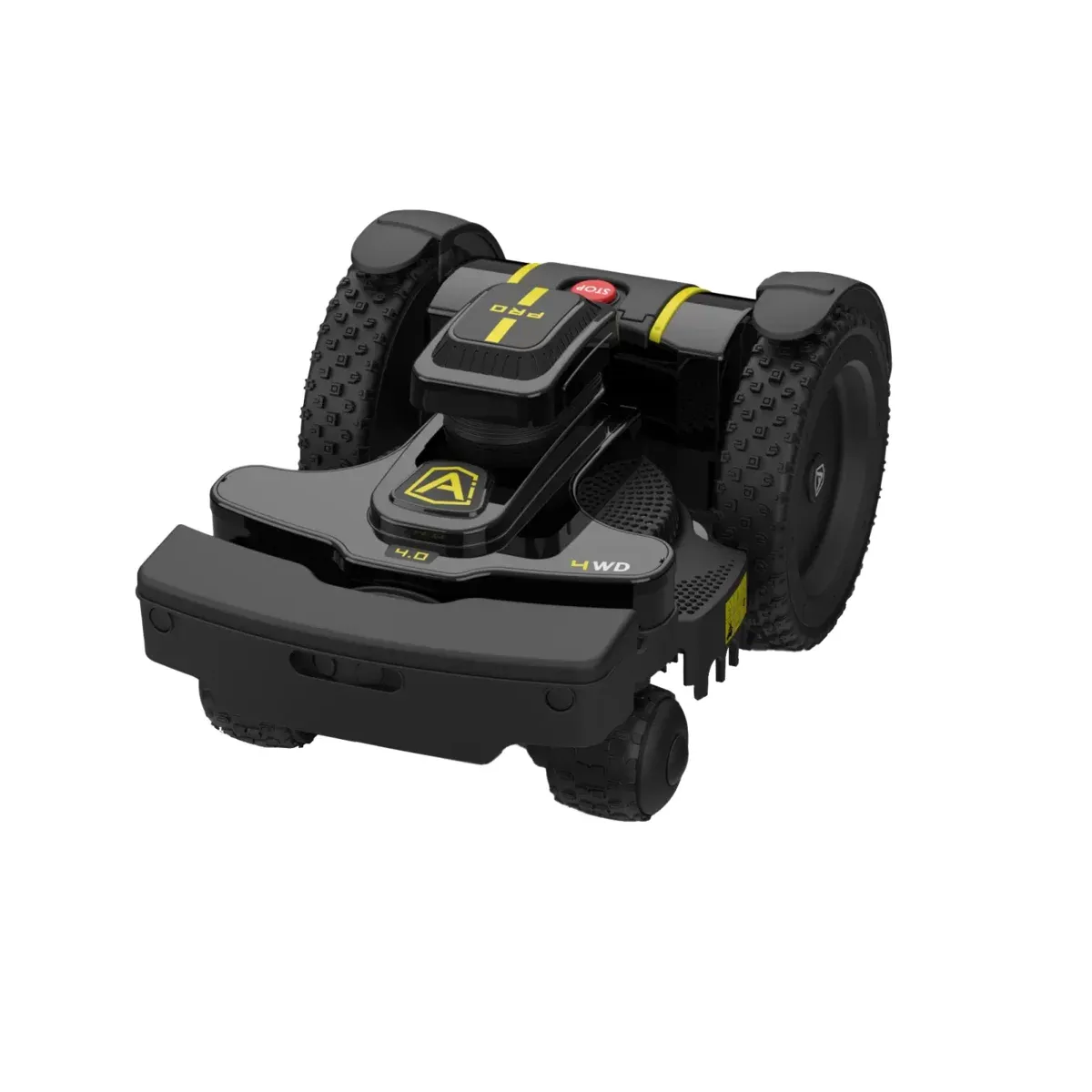 Ambrogio4.0 Elite RTK 4WD Ambrogio4.0 Elite RTK 4WD | Cloud GPS-RTK, pre-set path | 5,500 m² | 60% | 63 dB(A) | — |
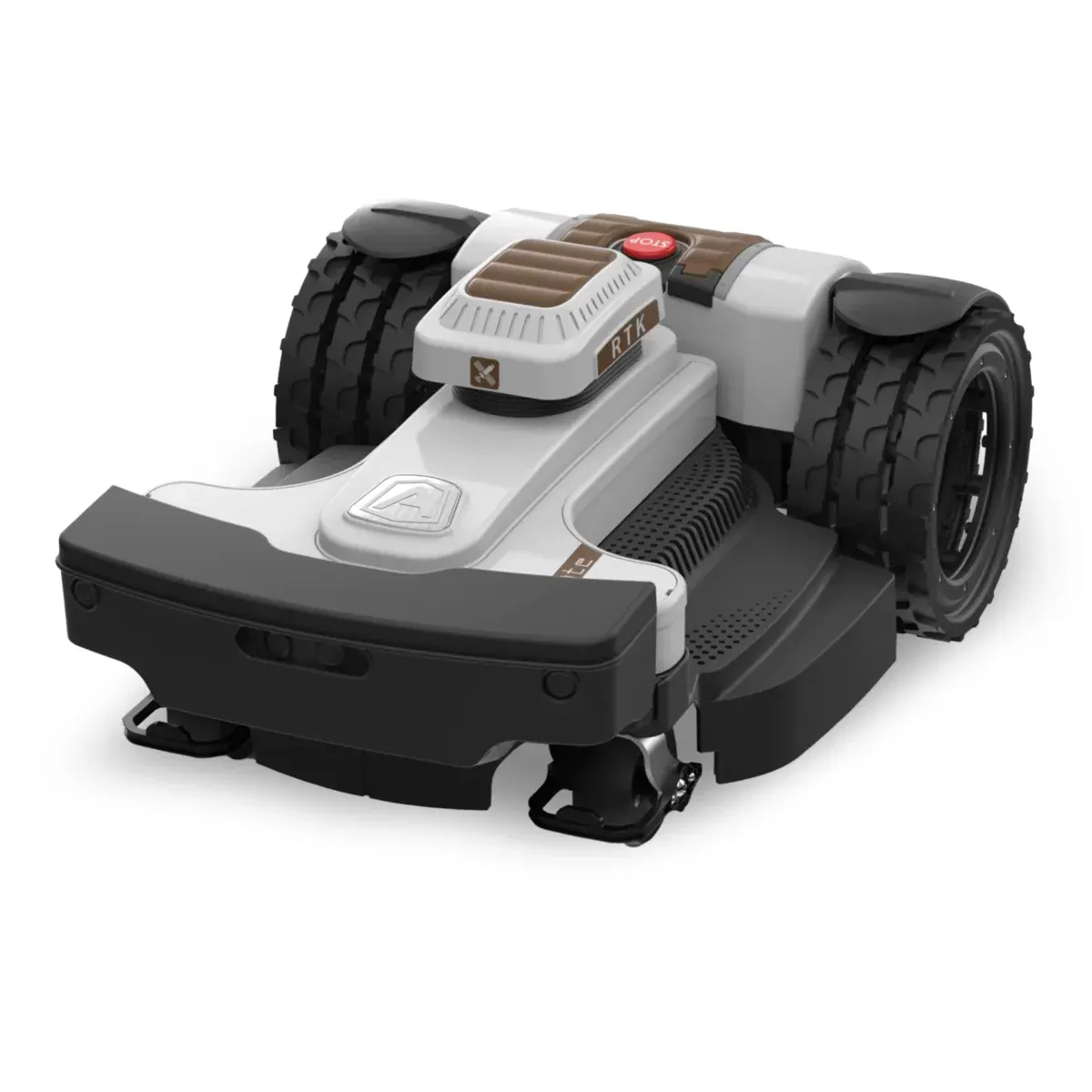 Ambrogio4.36 Elite RTK Ambrogio4.36 Elite RTK | GPS-RTK, pre-set path | 10,000 m² | 45% | 65 dB(A) | — |
Prices are manufacturer RRPs in the brand’s currency; ≈ figures use approximate exchange rates.
RTK-GNSS: FAQ
Where should I mount the RTK station?
As high as practical with a clear view of the sky in all directions — a roof edge, chimney bracket or tall pole — and within the range the manufacturer specifies. Avoid metal roofs right next to the antenna and spots shaded by trees.
What happens when the RTK signal drops?
Pure RTK mowers stop or return to the dock and wait for a fix. Models with cameras or LiDAR can keep mowing for a while using visual tracking.
Do I pay for RTK corrections?
Not with your own reference station. Network-RTK mowers use a data connection; many brands include several years of service, after which a subscription may apply.
Which robot mowers use RTK-GNSS?
8 models in our catalog from 4 brands: GARDENA, STIGA, Kress, Ambrogio.
What is the cheapest robot mower with RTK-GNSS?
The GARDENA smart SILENO free 600 at €906.38.
Which RTK-GNSS mower covers the largest lawn?
The Kress KR236 Mission RTKn 6-acre, rated for up to 24,000 m².
How steep a slope can RTK-GNSS mowers handle?
From 40% to 60%, depending on the model.