
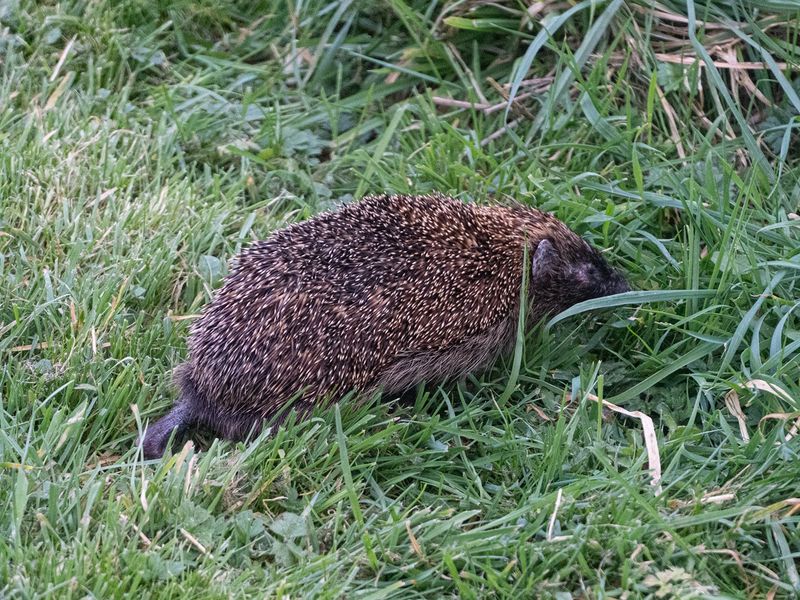
A robot mower is quiet, patient and can work at any hour — which is exactly the problem for one of the garden's most welcome visitors. European hedgehogs are mostly active from dusk to dawn, they forage on lawns, and when they feel threatened they don't run: they curl into a ball and stay put. A mower that runs at night meets them on their own territory, at the worst possible moment.
In the last few years researchers have measured how real that risk is. The short version: most of the danger disappears if you simply don't mow between dusk and dawn, and some mower designs are far safer than others. Here is what the studies found and what it means for choosing and programming a mower from our robot mower catalog.
What the research found
Crash tests with 18 mowers. A team led by Dr Sophie Lund Rasmussen (University of Oxford, Aalborg University) tested 18 robot mower models against hedgehog cadavers from rescue centres, in four weight classes and three positions — 12 trials per model. None of the mowers detected a hedgehog before touching it, and none detected juveniles under 200 g. But the outcome varied enormously: some models ran over the animal with spinning blades, while others only nudged it and turned away, which at worst would cause bruising.
Live hedgehogs react in three ways. In a follow-up, 50 rescue hedgehogs met a mower with its blades removed. They either fled, froze partly curled up, or sniffed the machine. Young hedgehogs were bolder than adults — and bold, small animals are exactly the ones mowers fail to detect.
Real injuries in Germany. Researchers at the Leibniz Institute for Zoo and Wildlife Research (Leibniz-IZW) in Berlin analysed 370 reported cases of cut injuries in hedgehogs across Germany. 47 % of the animals did not survive. Even small cuts can become fatal through infection or fly strike, so the institute calls for night bans and mandatory crash tests.
Which mower features make a difference
The Oxford/Aalborg crash tests produced a clear pattern. Three design features significantly improved a mower's safety score:
- Pivoting (swinging) blades. Small razor blades on a disc that fold back when they hit something harder than grass, instead of fixed blades or a solid bar. Most modern robots use them — check our blades and cutting discs section if you replace yours.
- A skid plate or guard under the front of the mower that pushes objects away before they reach the blade disc.
- Front-wheel layout and bumper behaviour that makes the mower stop and turn on light contact rather than climbing over.
A fourth feature was not yet common at the time of the tests but is now everywhere: AI camera and 3D sensor obstacle detection. Wire-free mowers such as the Mammotion LUBA 3 AWD, Dreame A3 AWD Pro, Navimow i206 AWD or eufy E15 use cameras or LiDAR to recognise objects and animals before contact. Manufacturers advertise recognition of hundreds of obstacle types, including pets and small animals. We have not tested hedgehog detection ourselves, and there is no independent standard yet that proves it — so treat it as an extra layer, not a licence to mow at night. Cameras also need light: in the dark, vision-based detection is much less reliable (see vision navigation and LiDAR).

How much each measure reduces the risk
| Measure | Effect | Cost | |
|---|---|---|---|
| No mowing from dusk to dawn | Schedule in the app | Largest — removes most encounters | Free |
| Check the lawn before a manual start | Walk the lawn, edges and long grass | High for daytime nests | Free |
| Pivoting blades + guard | Standard on most robots | Reduces injury severity | Included |
| AI vision / 3D obstacle detection | Mid and premium models | Promising, not independently verified | Higher price |
| Leave wild corners unmown | No-go zones in the app | Protects nests and resting spots | Free |
Night bans are arriving
Some German cities no longer leave it to owners. Leipzig bans robot mowers from 30 minutes before sunset to 30 minutes after sunrise, with fines of up to €50,000; Cologne also prohibits night operation, and Halle, Magdeburg and Erfurt have announced plans to follow. Environmental groups such as BUND call for a nationwide rule. Even where nothing is written down yet, it is a sensible default — and it costs you nothing, because a robot that mows a little every day has plenty of daylight hours.
How to set up a hedgehog-friendly schedule
- Mow only in daylight. A practical window is 9:00–18:00 in summer and 10:00–16:00 in spring and autumn. Most apps let you set this in a few taps; some (for example Husqvarna's Automower Connect) offer a dedicated night-pause.
- Spread mowing over the week rather than one long session — robots work best little and often, so shorter daytime runs are no disadvantage.
- Walk the lawn before manual starts, especially along hedges, compost heaps and long grass where hedgehogs rest by day.
- Create no-go zones around hedges, under shrubs and around wood piles. With RTK or LiDAR mowers this takes a minute in the app — see how robot mowers navigate.
- Keep a wild strip. A metre of long grass along the boundary is a corridor and a feeding area; the mower simply skips it.
- Stop in late autumn — when you winterise the mower, you also stop disturbing hedgehogs looking for hibernation spots. Our winter storage guide covers the rest.
What to look for when buying
If wildlife matters to you — and it should be part of the decision alongside lawn size and slope — check these points in the spec sheet and the app before you buy (our guide on how to choose a robot mower for your yard covers the rest):
- pivoting blades on a disc, with a guard or skid plate;
- camera or LiDAR obstacle detection that is active during mowing, not only during mapping;
- an easy schedule editor with a fixed night pause;
- no-go zones and a 'pass-through' channel feature so you can protect hedges and wild corners;
- low noise — quiet mowers are pleasant during daytime runs.
Compare shortlisted models side by side in our comparison tool.
Bottom line
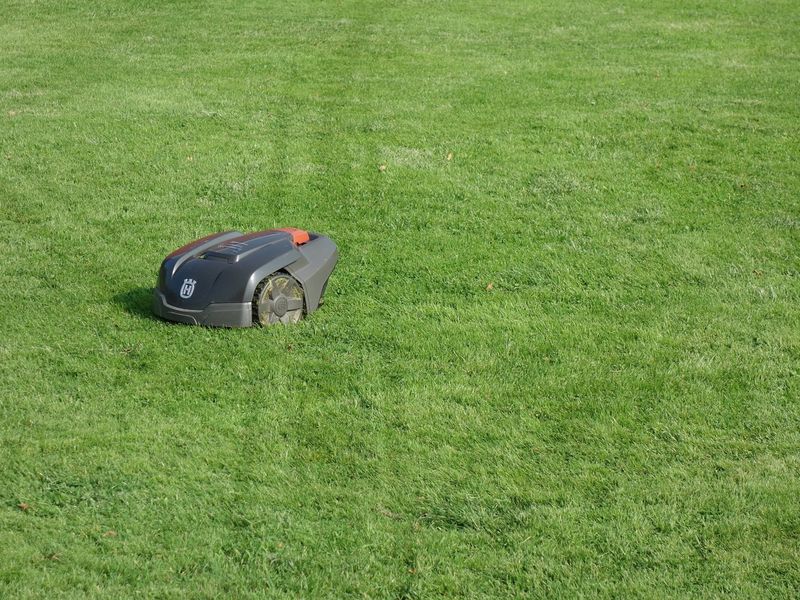
Robot mowers and hedgehogs can share a garden — if the mower works in daylight. No mower in independent crash tests detected a hedgehog before contact, so schedule, no-go zones and a quick lawn check do more than any sensor. Choose a model with pivoting blades and good obstacle detection, and never run it from dusk to dawn.
Frequently asked questions
Do robot mowers kill hedgehogs?
They can. German researchers analysed 370 injury cases, and 47 % of the animals did not survive. Most encounters happen at night, when hedgehogs are active.
Can a robot mower detect a hedgehog?
In the Oxford/Aalborg crash tests none of 18 models detected a hedgehog before contact. Newer mowers with AI cameras or LiDAR claim animal recognition, but there is no independent hedgehog test standard yet.
What time should I run my robot mower?
During daylight only — for example 9:00–18:00 in summer. Avoid the period from dusk to dawn, and in some cities, such as Leipzig, night operation is banned.
Are robot mowers safer than regular mowers and strimmers?
Strimmers and manual mowers also injure hedgehogs, especially in long grass. The key with any machine is to check the area first and avoid dusk and night.
- University of Oxford: Researchers develop hedgehog safety test for robotic lawnmowers (2024)
- British Hedgehog Preservation Society: product features of robotic lawn mowers determine danger to hedgehogs
- Leibniz-IZW: Crash tests, emergency brake assistants and night bans (2025)
- ZDFheute: Mähroboter und Nachtfahrverbote (2025)
We have been mowing lawns for 32 years — from a hand scythe to today’s RTK, LiDAR and vision robots. We compare, set up and troubleshoot robot mowers so you can pick the right one for your garden.